
Spend five minutes with someone who bought in the Bend Oregon housing market three years ago and you’ll hear one of two things: they are happy with their investment, or they are still surprised at how fast they had to move. Both reactions say something true about this place.
In 2026 the market looks different. Prices have dropped from their peaks, sellers are negotiating, and the frantic energy of the post-pandemic years has calmed into a more normal market. That does not make buying easy, but it does mean informed buyers now have choices they did not have before.
This guide is for anyone seriously thinking about buying here, whether that is a primary residence, a second home, or something in the luxury range. We will cover what the numbers actually show, how the different parts of town behave differently and what the move to Central Oregon realistically looks like on the ground.
The Current State of the Bend Oregon Housing Market
The clearest way to describe things right now is that the pendulum has swung back toward the middle. Not all the way to buyers and probably not any time soon. But the days of waiving inspections, offering $80,000 over ask and losing anyway are largely behind us.
Here is what the data shows heading into the second half of 2026:
- Median sale prices have settled in the $700,000 to $725,000 range after touching close to $875,000 at the peak of 2025 listing activity
- Homes priced honestly are going pending in two to three weeks. Homes that are not are sitting for two months or more before sellers start cutting
- Sales volume is up more than 20% year-over-year in early 2026, meaning more buyers are actually closing, even as top-end prices have pulled back
- Sellers are routinely accepting 2% to 5% below list and closing cost concessions have come back into deals in a way that was unthinkable 18 months ago
What that adds up to is a market that has repriced without collapsing. The reasons Bend holds value, limited land, consistent demand from larger metros and a lifestyle that people genuinely move here for, have not changed. What changed is that sellers no longer have the market entirely on their side.
For anyone who sat out 2023 and 2024 because the conditions felt impossible, the window right now is genuinely different.
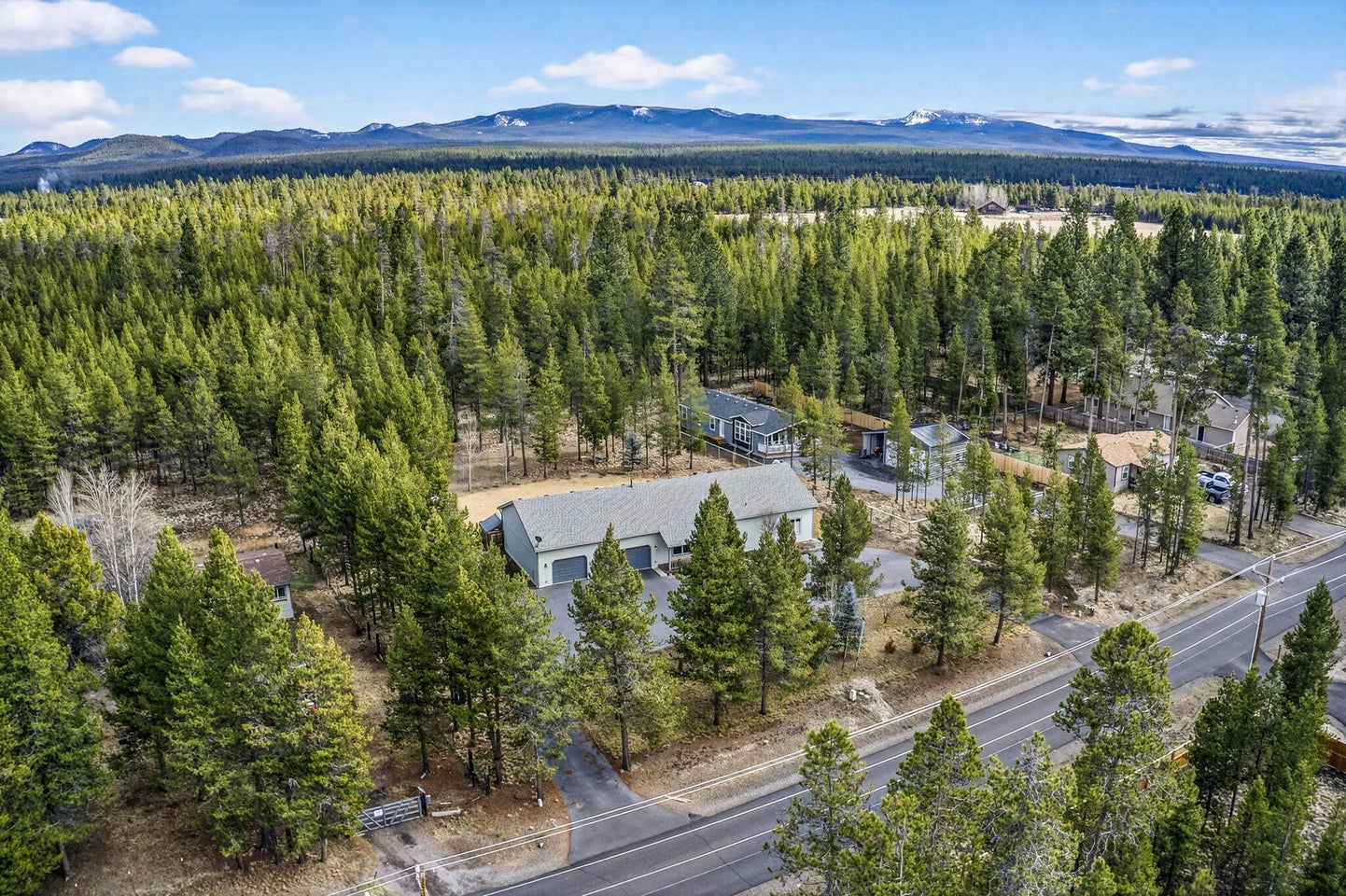
What Is the Average House Price in Bend Oregon?
There is no single number to tell you that. Bend is not one market. It is closer to four or five markets sitting inside the same city limits. The neighborhood you are buying in changes experience far more than the city-wide average.
According to market statistics published by the Central Oregon Association of REALTORS, the median sale price for a single-family home in Bend currently sits in the $700,000 to $725,000 range.
Here is how the city actually breaks down:
West Side (NW Crossing, Tetherow, River West)
Medians run above $900,000. Walkability to the Deschutes River trail, Drake Park and the downtown core is built into every purchase here. Inventory moves faster on this side of town even when the broader market slows.
East Side (Larkspur, Mountain View, Boyd Acres)
This is where the value story lives right now. Medians sit between $500,000 and $600,000, with newer construction, larger lots and the kind of garage space that actually matters when you own ski gear, bikes and a kayak or two. First-time buyers and families upgrading from smaller markets tend to land here.
Old Mill and Central Corridor
Condos and townhomes here sell for about $450,000–$750,000, based on size and finishes. They suit buyers who want walkable neighborhoods and low maintenance but not the full Westside price.
Your budget is under $550,000 and Bend isn’t showing enough options. Seriously consider Redmond real estate. It’s about 20 minutes north, has a median price near $499,000, and offers the same Central Oregon lifestyle without the Bend premium.
The Luxury Segment: Bend Premier Real Estate in 2026
High-end buyers need to understand one thing about this end of the market right now: quality is still moving, but wishful pricing is not.
Inventory priced between $1 million and $2 million in Deschutes County has been rising steadily through spring 2026. This does not mean the market is in trouble. It means the very fast sales pace of 2022–2023 has slowed back toward normal. Sellers in this price range are closing at about 94% to 95% of their original asking price. That means a $1.4 million listing typically sells for around $1.32–$1.35 million after negotiation.
For buyers, that gap is real money. The leverage that did not exist two years ago is sitting there now if you approach it correctly.
The pockets drawing consistent demand include:
Tetherow
A private resort-style community built around a David McLay Kidd-designed golf course. Homes here regularly close above $1.5 million. The combination of river views, managed common spaces and high-end spec construction keeps resale demand steady year to year.
Northwest Crossing
The planned Westside community is Bend’s most reliable high-end submarket. Custom builds hold their value well and the mixed-use design with walkable restaurants and shops adds a quality-of-life premium that buyers consistently pay for.
Shevlin Commons and River West
Proximity to Shevlin Park and the river trail is the draw. These properties do not come up often and when they do, they tend not to sit.
Sunriver
If resort living with short-term rental income potential is part of your thinking, Sunriver estate sits about 15 miles south and offers a completely different kind of purchase. The market there has its own cadence and its own buyer pool.
For buyers coming from international markets, whether the UK, the UAE, or further afield, Central Oregon’s high-end tier is still genuinely affordable by comparison to Aspen, Napa, or coastal California. The global luxury division at Knightsbridge International Real Estate works specifically within this segment and understands what cross-border buyers need throughout the process.
Why People Are Still Moving to Bend Oregon
The relocation numbers are not slowing down. Buyers keep arriving from Portland, Seattle, the Bay Area, Phoenix, Denver and increasingly from East Coast markets looking for a different pace of life. The entry cost is high and everyone knows it. They keep coming anyway.
The outdoor access is not a marketing line
More than 300 days of sunshine per year. Mt. Bachelor 21 miles from downtown. The Deschutes River running through the city. Smith Rock, the Cascade Lakes and miles of singletrack accessible in a short drive. For people who want the outdoors to be part of daily life rather than a weekend escape, this geography is difficult to replicate anywhere else in the country.
The town still feels like a town
About 107,000 people live here. Large enough for real restaurants, a growing arts scene, solid schools and something to do on a Tuesday. Small enough that you recognise faces, know your neighbors and are not anonymous. That balance is rarer than it sounds and it is a big part of why people who move here tend to stay.
Remote work changed who can realistically live here
Workers who no longer need to commute to San Francisco or Seattle can bring those salaries to a Central Oregon cost structure. Housing is expensive by Oregon standards, but not by Bay Area standards. That gap has driven a sustained wave of relocation that shows no sign of reversing.
Oregon’s tax picture helps more than people expect
No sales tax. Property taxes that are moderate relative to home values. Buyers relocating from California frequently discover that the ongoing tax structure is more favourable than their initial sticker shock suggested.
For a proper sense of what life in Bend looks like neighborhood by neighborhood, the Bend Oregon community guide at KBIRE is worth reading before you book a trip.
What Buyers Need to Know Before Making an Offer
Buyers who succeed in this market have one thing in common. They look at the numbers before getting attached to a property. Those who struggle underestimate ongoing costs or assume their local market is weaker than it really is.
Pre-approval is not optional
Homes below $600,000, particularly on the East Side, still generate multiple offers. Without a lender letter in hand, you are not taken seriously by any competent listing agent. For purchases requiring jumbo financing, working with a lender who actually knows this market matters more than most buyers realise until they are mid-deal.
The city-wide median is not your market
Know the days-on-market, price reduction rates and absorption figures for the specific neighborhood you are targeting. Those numbers vary enough that a city average can genuinely mislead you into either overbidding or underestimating competition.
Budget for carrying costs, not just the purchase
Bend’s cost of living runs about 12% above the national average and that premium is almost entirely housing. Groceries, utilities and healthcare track much closer to national norms. Worth knowing: homes built to 2020 or newer energy codes typically run 30% to 40% lower on monthly utility bills than older stock. Factor that into any comparison between new construction and resale.
Do not rule out nearby communities too quickly
Sisters has a quality of life and character that a lot of buyers discover they actually prefer once they visit. La Pine and Powell Butte offer real purchasing power for buyers willing to trade some proximity for more land and space. Each market runs on its own logic.
Your agent’s knowledge of this specific market matters a lot
In a place where the difference between a well-priced home and an overpriced one can be $40,000 or more, an agent who has tracked week-to-week changes through the last two years of shifts brings real value to the table. The buying process at KBIRE gives you a clear picture of how that looks from initial search through to a closed deal.
Questions Buyers Commonly Ask
Is now actually a good time to buy here?
For buyers who have been waiting for the market to give them more room, this is the best entry point in several years. Prices are off their peaks, sellers are negotiating and inventory has improved meaningfully. Mortgage rates hovering in the low-to-mid 6% range are not cheap by historical standards, but they are significantly better than the 7%-plus range that defined late 2024 and early 2025. Lower prices combined with better rates has moved the needle on what your money actually buys.
Will prices keep dropping, or is this about as low as it gets?
The supply problem in Bend has not been solved. There is not enough housing relative to the number of people who want to live here and that puts a real floor under values even when broader economic conditions create headwinds. Continued stabilisation is a far more likely scenario than either a sharp rebound or a continued slide.
What should I know about wildfire risk before I buy?
This is a question worth taking seriously and not skipping over in a rush to get an offer in. Certain parts of the Bend area carry meaningfully higher fire exposure than others and insurance costs reflect that gap. The Oregon Department of Forestry publishes defensible space guidelines worth reviewing early in your search. Ask your agent specifically about fire risk zoning for any property you are seriously considering, not after you are under contract.
Do I actually need a buyer’s agent?
Yes and the reason is straightforward. The agent on the listing is legally obligated to work in the seller’s interest. A dedicated buyer’s agent works for you and that is not a minor distinction when you are negotiating a $700,000 to $1.5 million purchase. The knowledge gap alone on pricing, contract terms and local customs is worth far more than any cost concern.
The Bottom Line
The housing market in Bend Oregon right now is not a buyer’s market in the classic sense. The more accurate framing is that the extreme seller advantage of the past few years has eroded and what is left is a market that rewards preparation and clear-headed thinking about price.
For luxury buyers, there is real negotiating room in the $1 million-plus segment for the first time in years. For relocation buyers, the lifestyle case for Central Oregon holds up, but you need honest numbers going in rather than hopeful ones. And for anyone sitting on the sidelines waiting for a better moment, the current conditions are as close to that as this market is likely to offer.
Knightsbridge International Real Estate works with buyers across the full spectrum of the Central Oregon market, from first purchases in Redmond to luxury properties drawing interest from buyers around the world. The KBIRE broker team brings specific, current knowledge of this market, not a generalised pitch built from national data.
Reach out when you are ready for a straight conversation about what your budget realistically buys and which neighborhood actually fits your life.