
People who don’t know Prineville tend to assume one part of town is pretty much like the next. It isn’t, not even close. We work these streets for a living, and the gap between a downtown bungalow and a five acre parcel out past Juniper Canyon comes down to a lot more than square footage. Water source, school zone, commute, how far you want your nearest neighbor to be. If you’re searching for homes for sale in Prineville Oregon, those differences matter more than the listing photos ever show.
So here’s the rundown on each part of town, built from what actually shows up in the listings and what trips buyers up when they don’t know the area yet.
Downtown
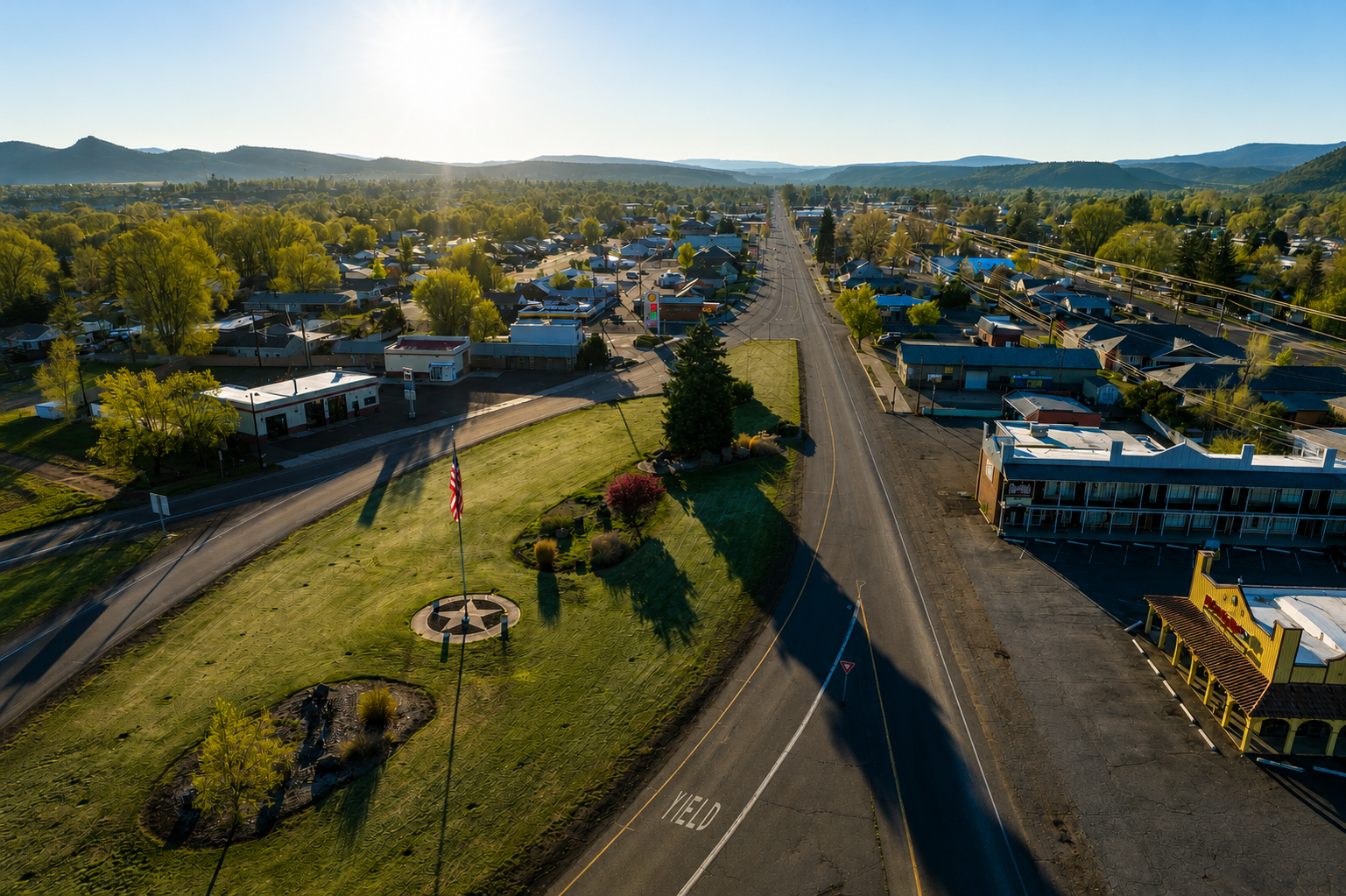
Downtown still feels like a real small town. You’ll see the old Crook County Courthouse, the clock tower, and people on Third Street on a Saturday morning. Most houses are older mid‑century bungalows and cottages from the 1930s–1960s with details you rarely find in new builds. Lots are small, alleys are common, and many homes need some work. That’s part of the trade.
What you get in return is being able to walk somewhere. Pioneer Park, Ochoco Creek, the Bowman Museum, all just a few blocks off in any direction. Downtown also happens to be the cheapest way into Prineville homes for sale, which is why first time buyers gravitate here, along with anyone who’s sick of driving for every small errand.
Ochoco Heights
Ochoco Heights is just above downtown and feels a little quieter and more settled. The lots are bigger, most homes from the 1940s and 50s have been updated, and the higher spot gives you better views. You can still walk to shops and schools, but life moves a little slower once you’re in the Heights.
Well kept homes here move fast. At Knightsbridge International Real Estate, our experience listing and showing homes in this area shows that a solid property in the Heights often receives an offer within two weeks, faster than the citywide average.
IronHorse
If you want new construction, IronHorse is really the only game in town right now. It’s Prineville’s first true planned community, and it shows in the small things:
- Consistent finishes and paved streets throughout
- Direct access into the Barnes Butte Trail System without ever getting in a car
- Elevated lots that catch rimrock and valley views
- A short walk to Barnes Butte Elementary for families with young kids
That polish costs something. IronHorse routinely sells above the city median, and the difference is basically the price of never having to touch a 1950s electrical panel.
West Hills
West Hills is where people land after touring IronHorse and deciding they want more dirt for the same money. Lots commonly run an acre or better, still close enough to town for a short drive instead of a real commute, with valley and mountain views that hold up no matter what gets built next door. Think of it as IronHorse with the shine taken off, and for plenty of buyers that’s the whole point. We show this neighborhood constantly to people who grew up on acreage somewhere else and can’t picture squeezing back onto a standard city lot.
Juniper Canyon
Southeast of the city, Juniper Canyon gets talked about almost entirely in terms of schools. It’s built a reputation as the strongest zone in the Crook County School District, and pricing follows suit. Lots run larger, the feel turns semi rural, and most properties sit on well and septic rather than city utilities. Listings here also linger longer than the city average once they hit the market, since fewer buyers are willing to pay the school zone premium.
Before you fall for a specific listing, check the wildfire risk. Parts of this corridor carry more exposure than the rest of Prineville, and it’s the kind of thing worth confirming on paper rather than assuming.
Indian Rock Estates and Longhorn Ridge
These two areas are where people go once an acre stops feeling like enough. Parcels commonly run around five, several bordering BLM land, and nearly everything out here runs on private well and septic. Buyers come for horses, room for a shop, or simply enough distance that a neighbor’s dog stops being your problem.
What you give up is convenience. Groceries, school pickup, any routine errand means a real drive, longer than anywhere else on this list, and that’s worth sitting with before the view talks you into an offer.
What the Prineville Oregon Real Estate Numbers Show
The numbers behind Prineville real estate help explain the pattern above. According to the U.S. Census, the median household income in Prineville is $72,980, while the median value of owner‑occupied homes is $425,900. That difference helps explain why downtown and Ochoco Heights attract many first‑time buyers, while IronHorse, West Hills, and the acreage neighborhoods draw buyers with more equity, often moving in from Bend or Portland.
Households carrying a mortgage here pay a median of $1,713 a month in owner costs, according to the same Census data, useful context if you’re comparing what a similar payment buys in Bend against what it buys in Prineville.
For the bigger picture, the job market, the outdoor access, what daily life actually looks like beyond real estate, our Prineville, Oregon guide covers that ground in more depth than a neighborhood breakdown can.
Picking the Right One
There’s no single best neighborhood in Prineville, only the best one for whatever life you’re trying to build here.
- Walkability and price matter most: downtown
- Want a settled street with room to breathe: Ochoco Heights
- New construction and trail access: IronHorse
- Land without leaving town: West Hills
- Top tier school access, even at a premium: Juniper Canyon
- Real acreage and distance from everyone: Indian Rock Estates or Longhorn Ridge
Bottom Line
None of this comes down to a formula. Two families can walk through the same house in Ochoco Heights, and one falls for the courthouse view while the other starts counting miles to the nearest grocery store. Both reactions make sense. It’s exactly why Prineville has room for a downtown bungalow crowd and a five acre, BLM adjacent crowd within the same fifteen minute drive.
What trips people up isn’t choosing the wrong neighborhood, it’s choosing one without knowing the details a listing description never mentions. Whether a street runs on city water or a private well. What the zoning really allows if you want to add a shop or a second dwelling. Whether a price is fair for that specific block or just fair for the town average. Those answers shift house to house in a place this small, and getting them right usually means walking the ground with someone who does this daily rather than trusting a search filter.
That’s where we come in. If you’re comparing homes for sale in Prineville Oregon and want to talk through which of these areas fits your budget and your daily life, KBIRE’s Prineville real estate agents know these streets well enough to save you a few wasted weekends.
FAQs
Q. What is the best neighborhood to find Prineville homes for sale?
It depends on what you want. Downtown is best for walking and lower prices, IronHorse is best for new homes, and Juniper Canyon is best for families who care most about schools.
Q. Is Prineville a good place to buy a house right now?
Plenty of buyers looking at houses for sale in Prineville think so, mostly because Prineville still costs meaningfully less than Bend or Redmond for a comparable home, and there’s more room to negotiate here than in tighter Central Oregon markets at the moment.
Q. Which Prineville neighborhoods run on city water instead of a well?
Downtown, Ochoco Heights, IronHorse, and West Hills are generally on city water and sewer. Juniper Canyon, Indian Rock Estates, and Longhorn Ridge mostly depend on private wells and septic, so confirm this before writing an offer.
Q. How far is Juniper Canyon from downtown Prineville?
Depends on the property. Juniper Canyon stretches southeast toward Prineville Reservoir, so some homes sit a short drive from downtown while others run closer to fifteen miles out.
Q. Are there acreage properties close to town, or do you have to drive far out for land?
West Hills gets you acre plus lots without much of a drive at all. For closer to five acres, look at Indian Rock Estates and Longhorn Ridge, just further from the center of town.